JAFF Market 2025 Wraps with Impact, Strengthening Indonesia’s Path as Asia Pacific’s Emerging Film Hub

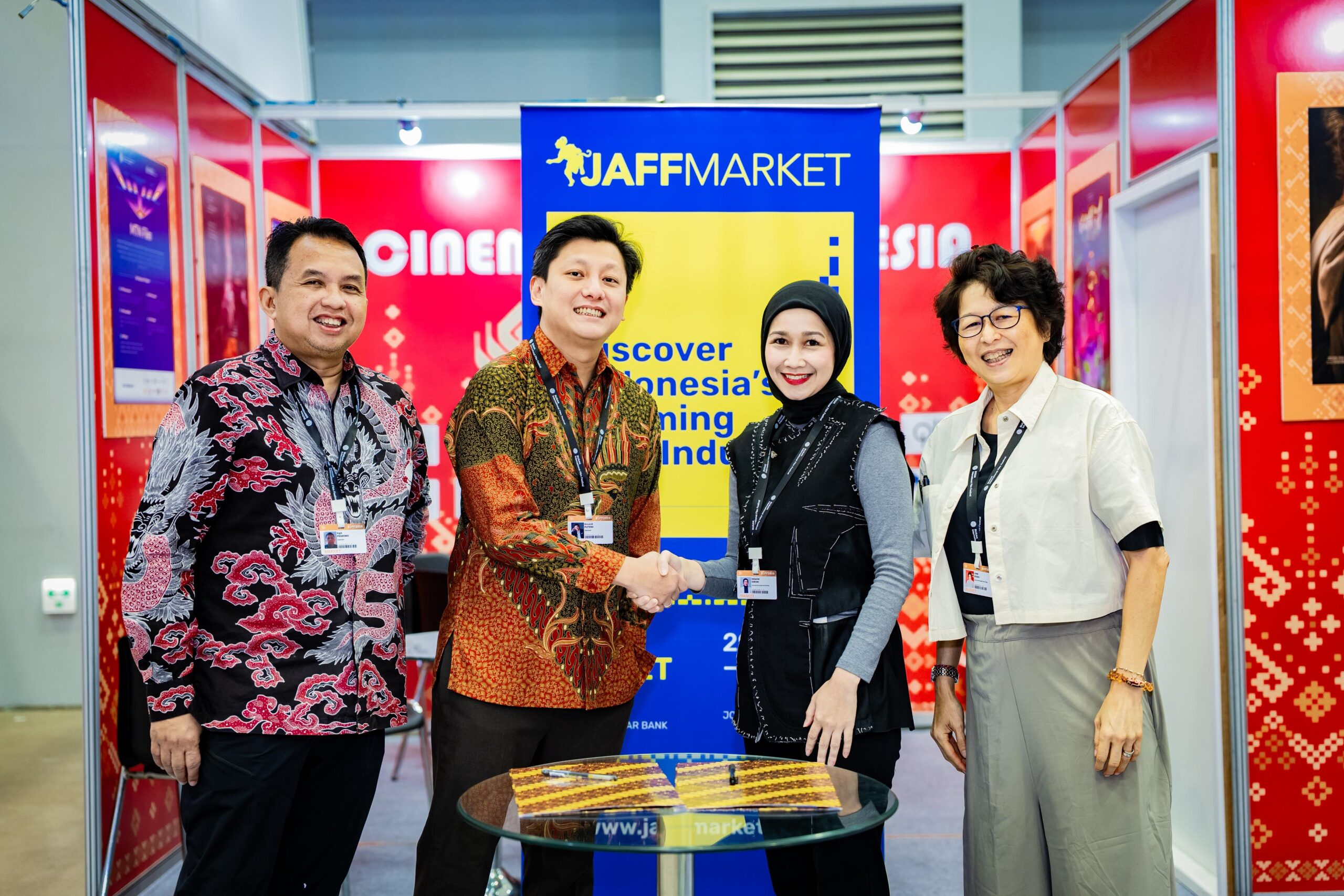
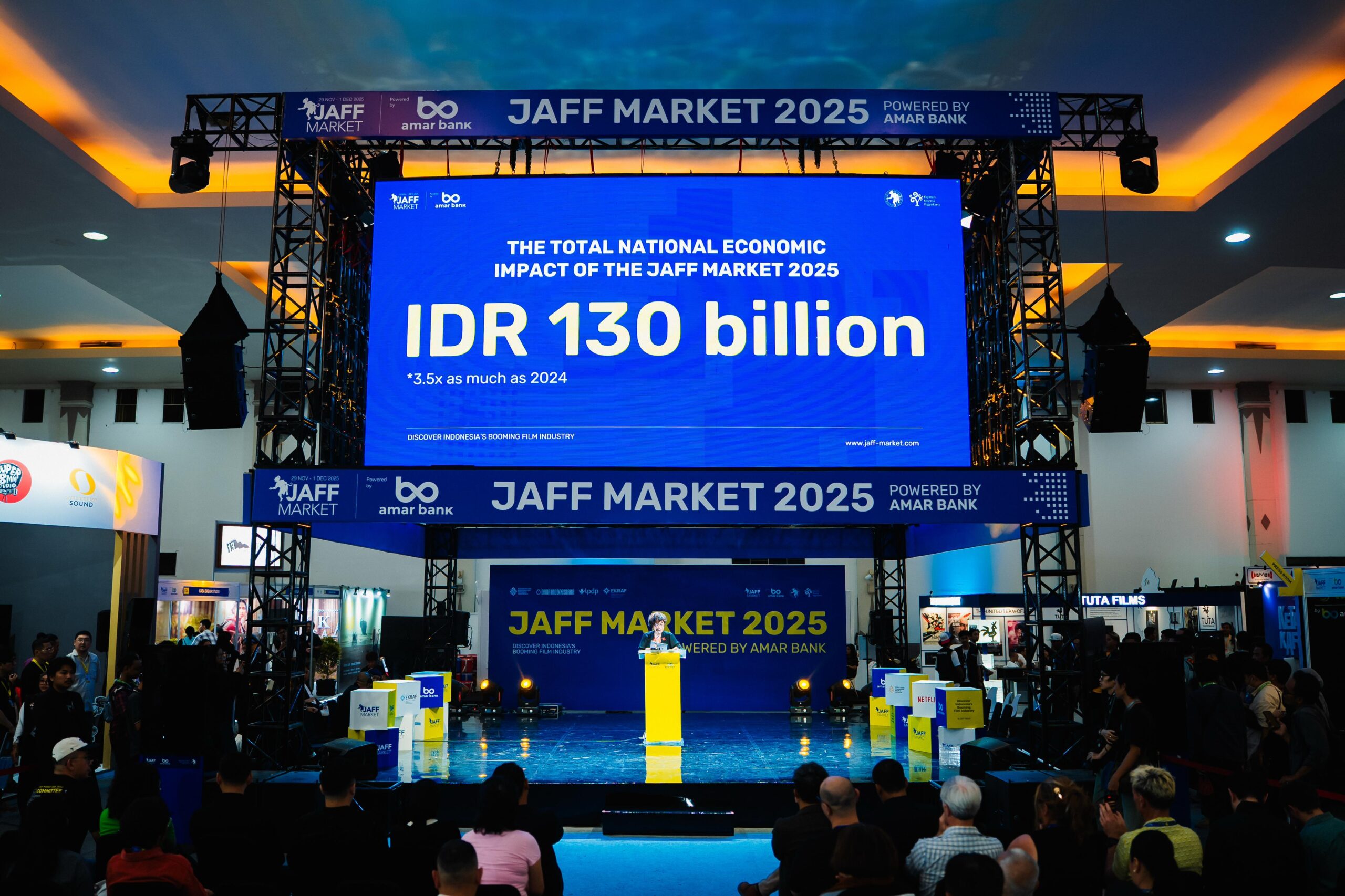
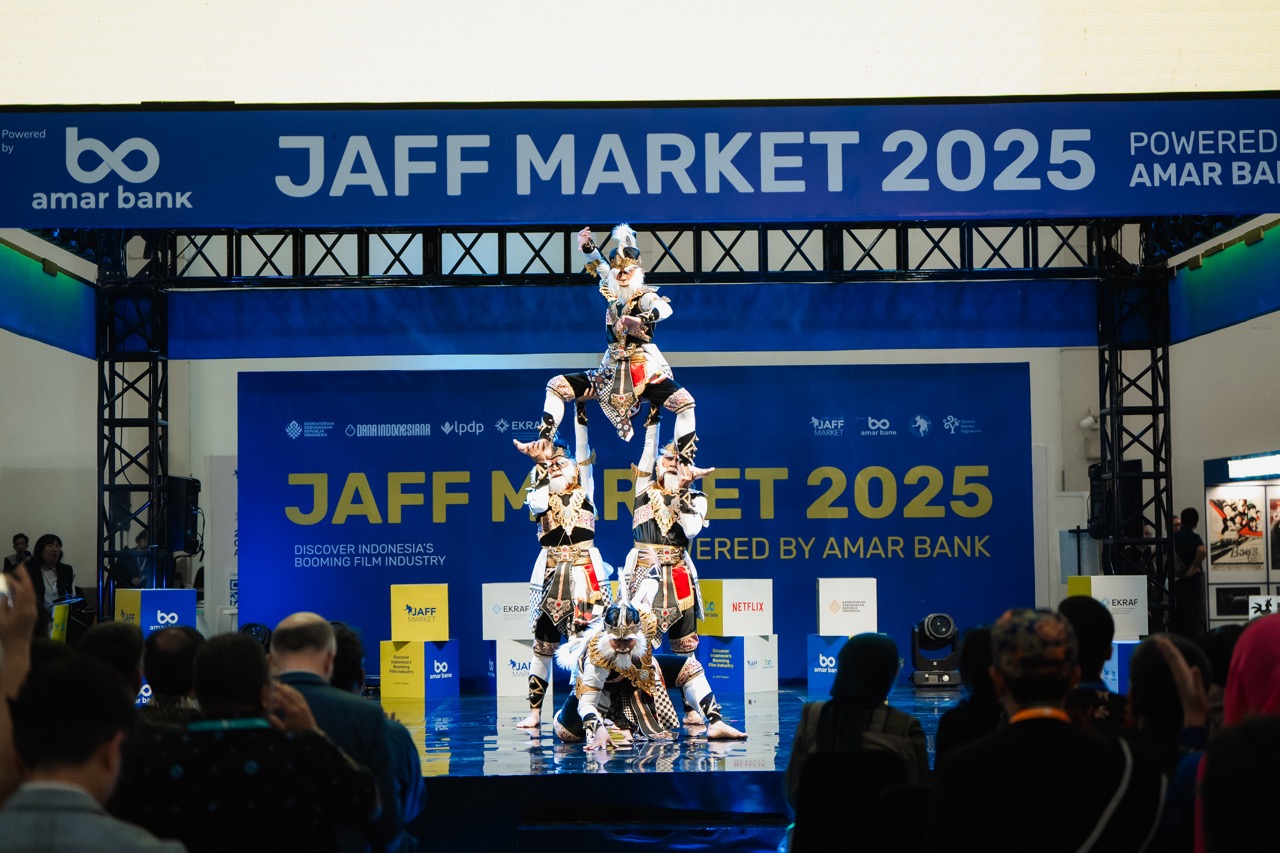
Yogyakarta, 01 December 2025 — JAFF Market 2025 Powered by Amar Bank officially wrapped today at the Jogja Expo Center (JEC), Yogyakarta, following three days of concentrated market activity, international networking, and deal-oriented conversations that underscored Indonesia’s growing influence within the screen and creative sectors.

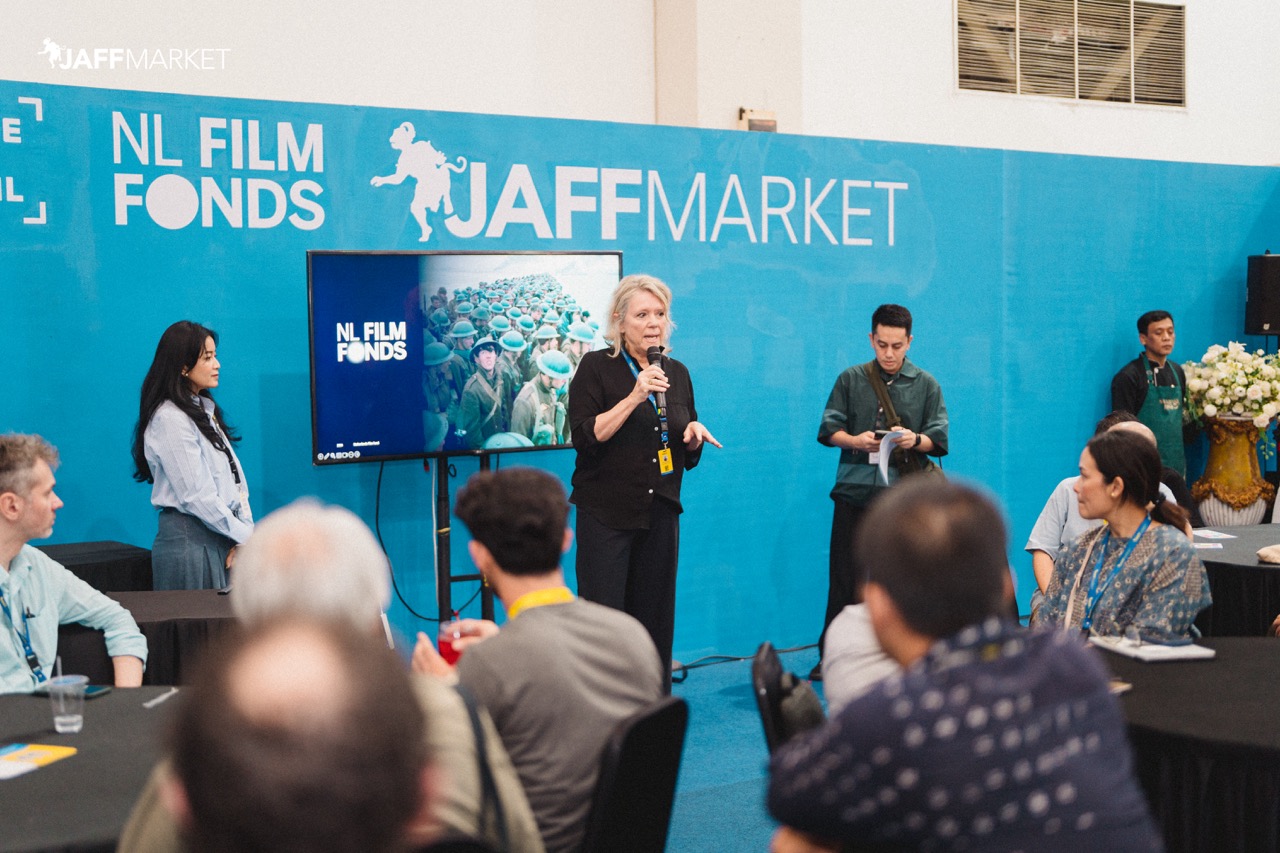
Throughout the event, the JEC became a meeting ground for policy makers, private capital, creative ideas and commercial strategy. Industry stakeholders ranging from producers, studios, and national film bodies to investors, technology platforms, and filmmakers from Asia, Europe, Australia, and North America gathered to explore co-production models, funding pathways, and content development strategies shaped by Indonesia’s fast-evolving creative economy.

This second edition recorded its strongest participation to date, welcoming:

  • 116 exhibitors and 122 companies
  • Over 1431 accredited industry participants
  • Over 7784 visitors
  • Participants from over 14 countries
  • 2433 one-on-one meetings for programs/exhibitors, pitching sessions, and closed-door business discussions 

JAFF Market also deepened its cross-sector collaboration through strong engagement from both public institutions and private enterprise. Backing from national ministries, international cultural organizations, and regional authorities, combined with rising participation from corporations, state-owned enterprises, and consumer and technology brands, signals growing confidence in the creative sector as a long-term economic driver.

Key partners this year included the Ministry of Culture (Kemenkebud), Ministry of Creative Economy (Kemenekraf), Embassy of France in Indonesia, Motion Picture Association (MPA), the Asian Film Alliance Network (AFAN), Adelaide Film Festival (AFF), CNC, and a broad range of industry leaders across finance, energy, technology, and consumer sectors.

“JAFF Market continues to grow not just in scale, but in purpose. We are building a platform that connects ideas to capital, talent to opportunity, and Indonesia to the world. What we saw over these 3 days is proof that Indonesia’s film industry is ready for deeper investment, stronger regulation, and wider collaboration,” said Linda Gozali, Market Director JAFF Market.

A series of industry awards and development grants were announced during the closing ceremony, supported by regional studios, international institutions, and corporate partners. These accolades ranged from financial support and post-production services to international market access, designed to provide selected projects with tangible support toward production and global exposure.

This year’s recipients included:

  • Motion Picture Association (MPA) Award, travel and accommodation support for two producers from two projects to attend the Asia Pacific Screen Awards (APSA) 2026, awarded to Our Son and My Mother.
  • MTN International Facilitation to Rotterdam Lab 2026, awarded to Evil Underground.
  • MTN International Facilitation to Hong Kong Asia Film Financing Forum (HAF) 2026, awarded to A Life Full of Holes.
  • Kongchak Studio Award, sound design post-production support valued at USD 10,000, awarded to Ghost Island.
  • White Light Award, color grading and mastering services valued at USD 15,000, awarded to Rose Pandanwangi
  • Prodigihouse Ecosystem Award, editing and color grading support valued at USD 15,000, awarded to Ghost Island.
  • Prodigihouse Ecosystem (Color Grading) Award, color grading support valued at USD 9,000, awarded to Our Son.
  • Brandlink Indonesia Award, production equipment support valued at IDR 500,000,000 (USD 30,000) per project, awarded to A Life Full of Holes and To My Dearest, My Dear….
  • Visinema Award, development grants of IDR 50,000,000 (USD 3,000) per project, awarded to To My Dearest, My Dear… and Ghost Island.
  • The United Team of Art Award, development grant of IDR 100,000,000 (USD 4,000), awarded to A Life Full of Holes.
  • In addition, through the JAFF Content Market, in collaboration with the Ministry of Creative Economy (Kemenekraf) and Asia Content Film Market (ACFM), two intellectual properties were selected to be showcased at ACFM 2026. This distinction was awarded to Elang Hitam and World Without Sleep.

The closing of JAFF Market 2025 signaled a growing confidence in Indonesia as a serious player in the global screen industry. With rising international attendance, stronger institutional backing, and an increasingly diverse range of projects and partners, the Market has evolved into a key meeting point for Asian and global film professionals.

At the closing of Southeast Asia’s largest film market, Variety also announced the Hot Picks Indonesian Films for 2026. A total of 12 titles were highlighted as must-watch films for the coming year, namely: Children of Heaven , Dance of the Damned (Badut Gendong), Four Seasons in Java (Empat Musim Pertiwi), Garuda: Dare to Dream (Garuda di Dadaku), Ghost in the Cell, The Last Flight (Penerbangan Terakhir), Na Willa, Operation: Pesta Pora (Operasi Pesta Pora), Rainbow in Mars (Pelangi di Mars), Sea Speaks His Name (Laut Bercerita), Sleep No More (Monster Pabrik Rambut), and Suzanna Witchcraft (Suzzanna: Santet Dosa Di Atas Dosa)

Looking ahead, JAFF Market will continue to strengthen its position as a catalyst for cross-border collaboration, investment, and talent development. The Market is committed to expanding its international network, refining its industry programs, and creating deeper engagement between Indonesian creators and the global film ecosystem.

“We are not just hosting an event — we are building an industry platform,” said Linda Gozali, Market Director of JAFF Market. “Our focus going forward is sustainability, impact, and access. We want Indonesian stories to travel, Indonesian talent to be seen, and Indonesian projects to be viable, competitive, and investable across global markets.”

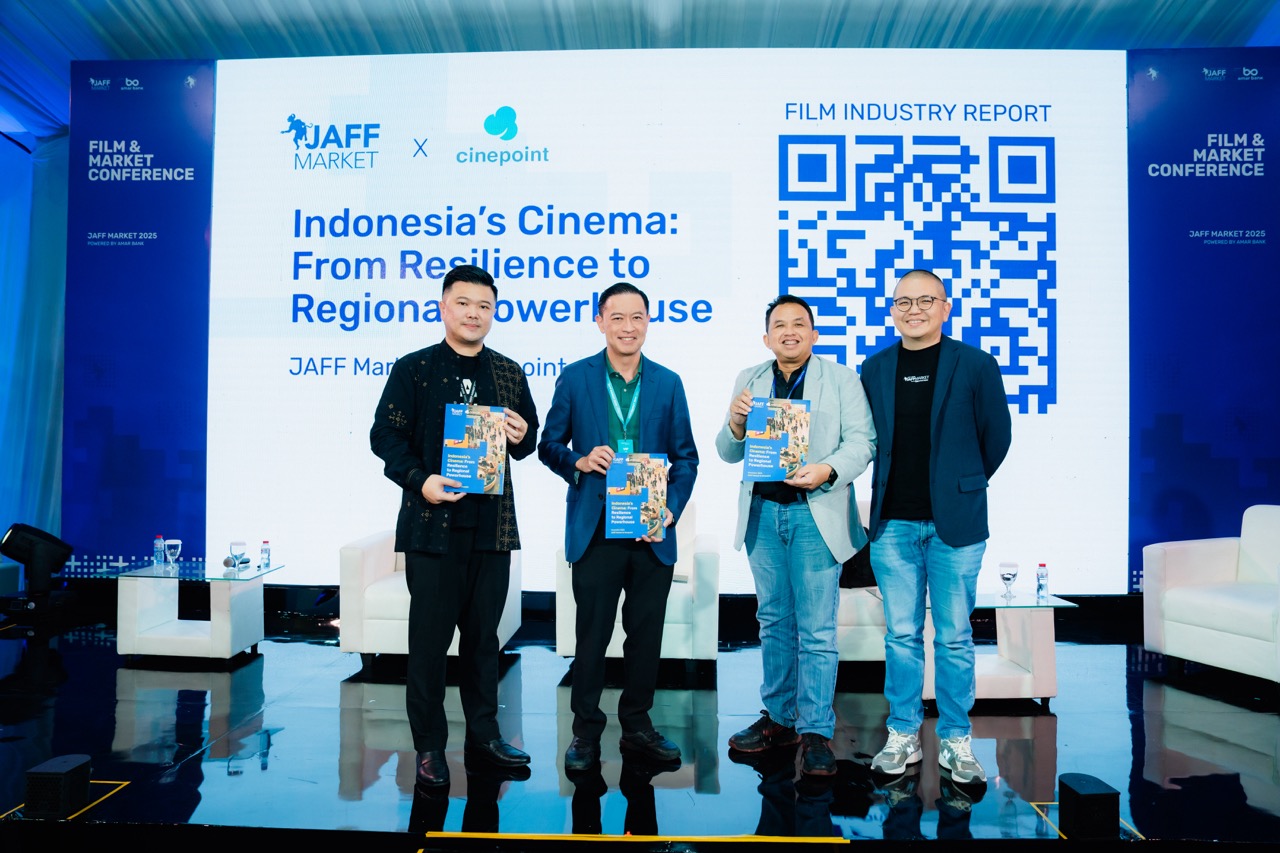
As part of its long-term commitment to data-driven ecosystem development, JAFF Market also released its inaugural JAFF Market Film Industry Report in partnership with Cinepoint, providing the most comprehensive overview to date of Indonesia’s admissions growth, economic impact, production trends, affordability metrics, and regional competitiveness. The report is available for public download.

JAFF Market also reaffirmed its commitment to working closely with government bodies, international organizations, and private-sector partners to ensure long-term growth for Indonesia’s creative economy. The combination of policy support, private investment, and talent development continues to shape JAFF Market’s role as a bridge between local voices and global opportunities.

With this year’s edition setting a new benchmark in scale, engagement, and output, JAFF Market now turns its attention toward its next edition — carrying forward its mission to elevate Indonesian cinema while positioning Southeast Asia as a key hub within the international film industry landscape.
Together with Cinepoint, JAFF Market Release its First Comprehensive Report on Indonesia’s Expanding Film Industry

Yogyakarta, 30 November 2025 — JAFF Market in partnership with Cinepoint officially launched its Film Industry Report during JAFF Market 2025 Powered by Amar Bank (29 November – 1 December 2025), presenting the most comprehensive data driven overview of Indonesia’s rapidly evolving screen industry to date. The report brings together long fragmented metrics across admissions, economic impact, production output, affordability, screen density, and investment trends, positioning it as a foundational reference for policy and industry planning.

As the first major publication from JAFF Market’s Data and Analytics Division, the report reflects a strengthened commitment to building an evidence-based creative ecosystem that supports informed decision making for producers, platforms, investors, government institutions, and regional partners.

Gundy Cahyadi, Head of Data and Analytics at JAFF Market, emphasised the importance of establishing a unified baseline. “Indonesia’s film industry has expanded quickly, but understanding where that growth occurs has often been incomplete. This report consolidates essential indicators the sector has long needed. It is not only a snapshot, but a framework to guide long term planning and benchmarking,” he said.

Sigit Prabowo, Co-Founder of Cinepoint, highlighted the value of shared data. “A healthy market depends on accessible information. Through this partnership, we aim to equip filmmakers, distributors, exhibitors, and investors with insights that were previously scattered or unavailable. This report supports a more transparent, collaborative, and investment ready environment,” he stated.

Designed to be accessible and practical, the report encourages further dialogue and analysis while offering actionable insights for industry stakeholders. By presenting a cohesive picture of Indonesia’s film landscape, JAFF Market seeks to strengthen transparency, improve strategic decision making, and support the long term development of one of Asia’s most dynamic creative markets.

Key Findings from the Film Industry Report:

  • Cinema admissions continue to rise. Local film attendance reached 82 million in 2024 and has potential to surpass 100 million by 2026, growing an estimated ten percent annually.
  • The economic contribution is significant. Indonesia’s screen sector generated USD 8.2 billion in output, contributed USD 5.1 billion to GDP, and supported 387 thousand jobs in 2022.
  • Film output is increasing. Indonesian theatrically-distributed productions are projected to reach 200 titles per year by 2028, up from 152 in 2024, as established studios and new entrants invest in a strong domestic market.
  • Local films dominate demand. Indonesian titles secured 65 percent of the national box office in 2024. The top ten local films recorded 33.5 million admissions, far surpassing the 20.1 million admissions from imported releases.
  • Indonesia remains under screened. Cinema visits average only 0.45 per person per year, among the lowest globally, demonstrating large untapped audience potential.
  • Screen density is still low. Indonesia has 7.7 screens per one million people, with the majority located in Java, highlighting regional imbalance and large opportunities for expansion.
  • Cinema going is a middle class privilege. Indonesian audiences spend a share of income per ticket that is six times higher than viewers in Singapore or North America, indicating the need for more accessible exhibition models.
  • Investment interest is rising, but capability varies. Future industry growth depends on capital that brings expertise in networks, distribution, and marketing, not only funding.
  • Policy modernization is essential. The report calls for a regulatory shift toward content classification and reinvestment based approaches that support industry stability and long term development.
  • The outlook is promising. With strengthened data systems, improved regulation, and greater access, Indonesia is positioned to become a creative leader in Southeast Asia with stories that resonate globally.

Sekarini Seruni, Business Director of JAFF Market, underscored the strategic importance of the report as the Market looks ahead to its next phase of growth. “This report is more than a compilation of numbers. It is a map of where the industry stands and a compass for where it needs to go. For years, Indonesia’s creative sector has grown on intuition and momentum. Now we have the baseline that allows us to build with intention. Data is the bridge that connects creative ambition with sustainable industry structure. It guides investors toward real opportunity, helps policymakers understand where support is needed, and gives filmmakers clearer visibility of the landscape they are building in. Our goal is for this report to become a living reference for the sector, updated, expanded, and used widely as Indonesia strengthens its place in the global creative economy.”


The Film Industry Report by JAFF Market in partnership with Cinepoint is available for public download here. 

JAFF Market 2025 Opens Today, Highlighting Indonesia’s Global Creative Ambitions

Yogyakarta, 29 November 2025 — JAFF Market 2025 Powered by Amar Bank officially opened today at the Jogja Expo Center (JEC), Yogyakarta, marking Indonesia’s most ambitious gathering for the film and creative industries to date. This year, JAFF Market welcomes over 114 exhibitors, more than 1500 accredited visitors, and a growing delegation of international guests, visitors, production companies, distributors, national film agencies, creative studios, and cross-sector partners from across the Asia Pacific, Europe and North America. Over the next three days, participants will engage in a wide range of pitching platforms, business meetings, talent development programs, and curated industry forums.

As part of the 20th anniversary celebration of the Jogja-NETPAC Asian Film Festival (JAFF20), this year’s edition significantly expands its industry footprint through six core programs, including JAFF Future Project, JAFF Content Market, Talent Day, Film and Market Conference, Market Screening, and the Indonesia–France Film Lab x MTN Lab. 

JAFF Market 2025 Powered by Amar Bank features:

Institutional support for JAFF Market 2025 is broader and stronger than ever. Powered by the private sector through Amar Bank, this year’s edition is held with the support of the Ministry of Culture (Kemenkebud) and the Ministry of Creative Economy (Kemenekraf), along with the support of the Embassy of France in Indonesia, the local governments of Jakarta and Yogyakarta, and international partners. Together they champion JAFF Market’s mission of strengthening Indonesia’s creative industries on the global stage. Their collective presence reflects a clear commitment to industry growth, investment readiness, and regional market expansion.

“We are delighted to welcome everyone to JAFF Market 2025. Indonesia’s film industry is entering a pivotal moment where local films are securing over 60 percent of the box office, production activity is rising, and the region’s creative energy is stronger than ever. To sustain this momentum, we must continue strengthening regulation, incentives, investment, and long-term infrastructure. JAFF Market plays an important role in opening global access for Indonesian storytellers, and the strong international participation this year shows that Indonesia and Southeast Asia are increasingly viewed not just as markets, but as creative centres and investment destinations,” said Linda Gozali, Market Director JAFF Market.

In attendance at the opening of JAFF Market 2025 were Ahmad Mahendra, Director General for Cultural Development and Empowerment at the Ministry of Culture of the Republic of Indonesia; Sultan Baktiar Najamudin, Chairman of the Regional Representative Council (DPD RI); and Rano Karno, Deputy Governor of Jakarta. Their presence underscored the government’s growing support for strengthening the country’s film ecosystem.

Since its inaugural edition, JAFF Market has been recognized as a vital meeting ground for filmmakers, producers, distributors, and other industry players to expand networks and reinforce the film value chain. Government institutions have not only backed the ecosystem but also taken an active role in driving the sector’s growth.

The government hopes that JAFF Market will continue to advance Indonesia’s film industry while generating broader economic impact at both national and regional levels.

This year at JAFF Market, participation and collaboration from both domestic and international partners continue to grow, signaling rising confidence in Indonesia’s dynamic screen economy. Corporate involvement and leading private-sector companies are increasingly active, while international collaboration remains a defining strength. Partnerships include APROFI (Association of Indonesian Film Producers), Adelaide Film Festival (AFF), Asian Film Alliance Network (AFAN), Motion Picture Association (MPA), and numerous global institutions, all helping to strengthen co-production pathways, industry learning, and shared initiatives that position Yogyakarta as a rising hub for international film exchange.

Representing Indonesia’s vibrant creative landscape, JAFF Market brings together major companies and associations including Visinema, Imajinari, MAGMA Entertainment, Forka Films, Mandela Pictures, VMS, Starvision, Rapi Films, Base Entertainment, BSM, MVP, Cinepoint, Sinemaku, Soda Machine Films, Paragon Pictures, Maxstream Studios, Studio Antelope, Wahana Creator, TUTA Films, Kawan-Kawan Media, Miles Films, and more. 

On the international front, the Market welcomes KOFIC, KCFIN, FINAS, CFAM, MPA, Toei, Mockingbird, Skyline Studio, Nikkatsu, Golden Scene, Bitters End, Rediance, AFF, Kongchak Studios, White Light, CNC, Unijapan/TIFFCOM, HAF, Beta Group, Impact Films, Udine Far East Film Festival, Barunson E&A, VIPO, Cannes Semaine de la Critique, Finecut, Sony Pictures, Mokster, Hubert Bals Fund, Variety, Screen Daily, Content Asia TV, Netherlands Film Fonds, Berlinale, Bangkok International Film Festival, Red Sea Souk, Giraffe & E&W Films, Loaded Films, Screenworks Asia, and many more.

In support of project development and creative advancement, JAFF Market 2025 also presents a series of industry awards contributed by leading companies across the region:

    • The United Team of Art (TUTA Films) Awards will support one project with cash awards IDR 100.000.0000 or around USD 6,000.
    • The Visinema Awards are granted to two projects with a cash award IDR 50.000.000 or around USD 3,000.
    • The Brandlink Awards provide two projects with equipment facilities valued at IDR 500.000.000 or around USD 30,000. 
    • The Kongchak Award provide post production support for one project with sound design facilities valued at USD 10,000
    • The White Light Award for one project with color grading and mastering facilities valued at USD 15,000
    • The Prodigihouse Ecosystem Award for one project with editing and color grading facilities valued at USD 15,000.
    • The Motion Picture Association (MPA) will present one special award, offering an MPA-sponsored return trip for one to the 2026 Asia Pacific Screen Forum and Awards on the Gold Coast, Australia for 1 project and 2 participants. 
    • MTN International Facilitation goes to Rotterdam Lab to support 1 (one) selected producer from the JAFF Future Project participants to join the Rotterdam Film Lab program in January 2026.
    • MTN International Facilitation goes to HAF to support for 1 (one) selected project, consisting of 2 (two) team members, to participate in HAF (Hongkong-Asia Film Financing Forum) at the Hong Kong FILMART in March 2026.

JAFF Market is excited to collaborate with a wide range of agencies and organisations in presenting official lunches and networking events throughout the program, creating meaningful spaces for regional dialogue and cross sector exchange. Industry Lunches will be hosted by the Ministry of Creative Economy Republic Indonesia (EKRAF), Korean Film Council (KOFIC), and the French Embassy in Indonesia together with Institut Français d’Indonésie (IFI) in collaboration with Asosiasi Produser Film Indonesia (APROFI). JAFF Future Project (JFP) Lunches will feature The National Film Development Corporation Malaysia (FINAS), Adelaide Film Festival (AFF), and Tokyo International Film Festival Content Market (TIFFCOM). Happy Hour Networking sessions will be supported by the Korean Film Commission and Industry Network (KFCIN), Triple Green CineCapital (TGC), and the Asian Film Alliance Network (AFAN) in collaboration with Centre national du cinéma et de l’image animée (CNC).

The inaugural edition of JAFF Market in 2024 exceeded expectations as a vibrant hub for collaboration, dealmaking, and cross-sector partnerships. This second edition promises even stronger momentum, deeper industry insights, and a broader convergence of creative communities from across the region.

Indonesia’s JAFF Content Market Unveils 10 Original IPs for Screen Adaptation

The Jogja-Netpac Asian Film Festival is doubling down on intellectual property development with the unveiling of 10 original IPs selected for its 2025 Content Market, backed by Indonesia‘s Ministry of Creative Economy.

Set to run Nov. 29-Dec. 1 at Yogyakarta’s Jogja Expo Center during JAFF’s 20th anniversary celebration, the Content Market will showcase properties spanning games, comics, novels, animation and digital content — all vetted for screen adaptation potential.

“The strength of Indonesia’s creative economy lies in its storytelling,” said Teuku Riefky Harsya, Minister of Creative Economy. “Through platforms like JAFF Content Market, we can transform local intellectual properties into globally relevant creative products.”

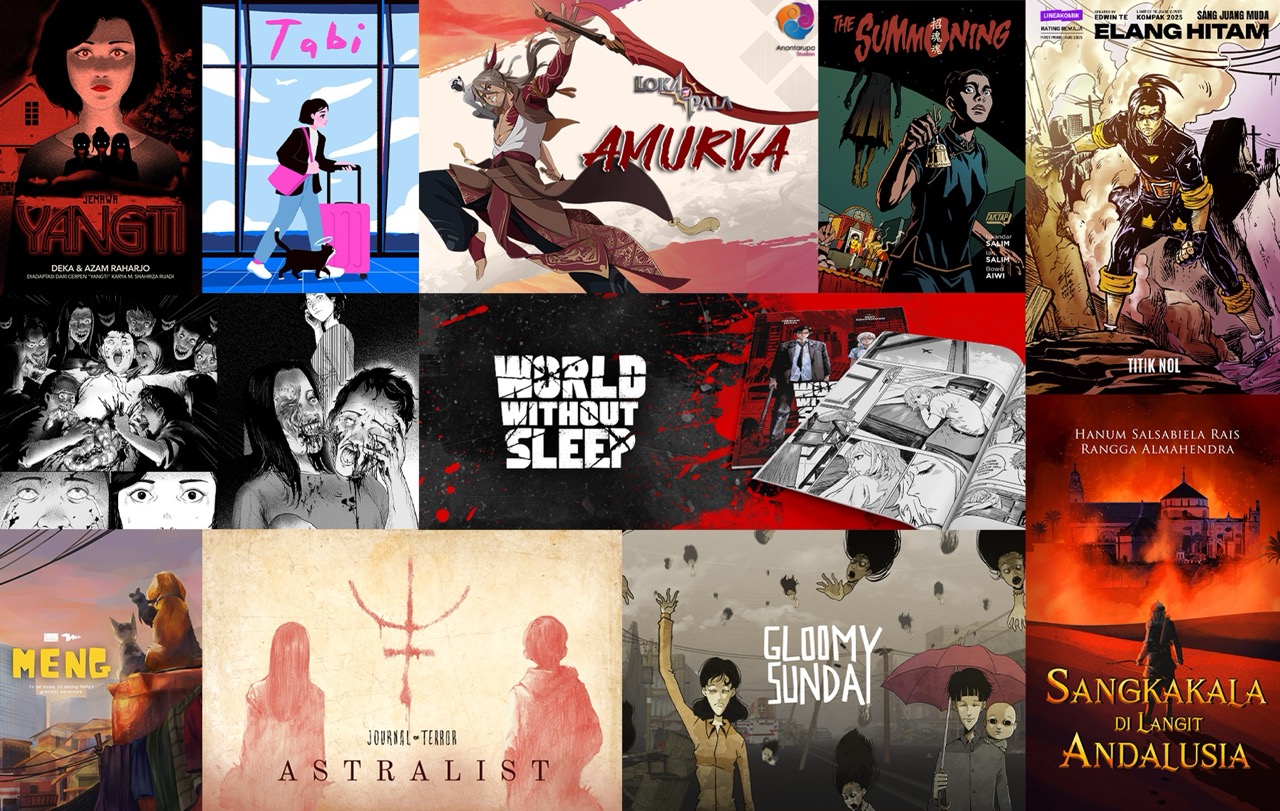
The selected lineup includes video game “Amurva” from Ninoi Kiling; comics “Elang Hitam” by Edwin Fernando Tranggono, “Jemawa Yangti” by M. Shahriza Rijadi, “Journal of Terror” by Sweta Kartika, “The Summoning” by Iskandar Salim and “World Without Sleep” by Ferdian Feisal; animation project “Meng” from Monoma Films; novels “Sangkakala di Langit Andalusia” by Hanum Salsabiela Rais and “Tabi” by Marchella FP; and digital content “Gloomy Sunday” by Fanky Landerson.

Each IP underwent curatorial review assessing narrative strength, visual potential, commercial viability and cross-sector collaboration readiness. The program is designed to bridge Indonesia’s publishing, gaming and music sectors with its expanding film and streaming industries.

“Many of our nation’s best stories already live in books, songs and games, and this platform helps them find new life through film and series adaptation,” said Linda Gozali, market director of JAFF Market. “Our goal is to position Indonesia not only as a production destination but also as a source of original, adaptable ideas.”

The initiative builds on momentum from JAFF Content Market 2024, when three Indonesian IPs — “Bandits of Batavia,” “Locust” and “Jitu” — were selected for Cannes Film Festival’s Spotlight Asia program, connecting creators with studios and distributors focused on Asian IP adaptation.

The Content Market, sponsored by Amar Bank, facilitates curated pitching sessions and business meetings between IP creators and producers, investors and distributors from across Asia.

The film festival runs through Dec. 6.

What’s next for Indonesian film? JAFF Market has a plan

When Indonesian movies captured two-thirds of the national box office last year, it marked a high point for an industry long in search of steady ground. Now, JAFF Market, the business arm of the Jogja-NETPAC Asian Film Festival (JAFF), is working to make sure the momentum doesn’t ebb.


As part of its mission, the initiative is collecting and analyzing data to push for evidence-based policy reforms, ranging from more even distribution of movie theaters to better accessibility to movies across the country.


“Without data, people will just follow the herd, producing many films without the appropriate quality,” FX Iwan, business strategist at JAFF Market, said in late September during a visit to the The Jakarta Post’s editorial offices in Central Jakarta.

“In the end, consumers will get bored and the industry will retreat again.”

Third cinematic age

Homegrown productions dominated domestic market at 65 percent of total ticket sales in 2024, or roughly 82 million admissions, according to data compiled by JAFF Market in collaboration with market research platform Cinepoint.

Iwan has dubbed this period the “third golden age” of Indonesian cinema, following the industry’s earlier booms in the 1970s and mid-2010s, both of which were followed by steep declines.

The first golden age ran from the 1970s to early 1980s, when a surge in stand-alone theaters across Jakarta and surrounding regions made moviegoing a staple pastime. But by the 1990s, the rise of television, VCDs and DVDs pulled audiences away, leading to the closure of many theaters. The 1997-1998 Asian financial crisis and rampant piracy deepened the slump.

The industry experienced a revival after restrictions on foreign investment were lifted in 2016. This brought new capital to cinema chains and fueled a sharp rebound by 2019, when theaters welcomed around 50 million moviegoers. Then came the pandemic in 2020 that halted the momentum once again, albeit for a few years rather than decades.

Iwan emphasized that the rebound that followed must be managed carefully.

“This time, we must ensure the cycle doesn’t repeat,” he said.

Local studios released 152 movies last year, and JAFF Market projects that number will grow to at least 200 annually by 2028. Meanwhile, it expects ticket sales to increase 10 percent each year, reaching around 100 million admissions by 2026.

But sustaining that growth will require one thing: more theaters.

More screens

The country has around 2,000 movie screens serving a population of over 280 million, one of the lowest ratios in Asia. The country’s top three operators, Cineplex 21 Group, CGV Cinemas and Cinepolis, operate two-thirds of their theaters on Java, leaving other regions vastly underserved.

“Theater locations are heavily concentrated on Java, while cities on Sumatra, in Kalimantan and Sulawesi remain underpenetrated,” Iwan said.

“That’s the next ‘homework’ for the industry: How to distribute films more evenly.”

He noted that regional audiences often rallied around stories reflecting their own culture. Rumpi Entertainment’s 2016 comedy Uang Panai’, for example, underperformed on Java but drew crowds in North Sulawesi, where people reportedly chartered buses to head to a theater.

“We need more screens to make such films accessible,” Iwan said.

Linda Gozali, market director of JAFF Market, said one solution could be to develop independent cinemas outside shopping malls, where tickets would be more affordable and movies more geographically and economically accessible.

“How do we nurture the habit of moviegoing so it becomes part of our culture, regardless of background?” Linda said.

She added that expanding the number of independent theaters in regions could also extend the theatrical window for local productions.

“Sometimes a film may not resonate in one area, but it could be a huge hit somewhere else,” she said. “Yet it’s often pulled from screens too early.”

More regional theaters could also translate into audience growth. Admissions per capita last year was 0.28, meaning around two-thirds of the population didn’t go to a movie theater. This was far below Malaysia’s rate of nearly 1 visit per person.

Data and dialogue

To better understand the factors behind this growth trend, JAFF Market will publish a complete report on movie industry during its second annual event, to be held from Nov. 29 to Dec. 1 this year in conjunction with the 20th JAFF at the Jogja Expo Center (JEC) in Yogyakarta.

The three-day gathering aims to bring together filmmakers, producers, investors and distributors to assess industry developments and explore new opportunities.

“If we don’t have proper data, how can we convince others that enthusiasm for Indonesian films is so high?” said JAFF Market business director Sekarini Seruni.

Last year’s inaugural edition drew nearly 7,000 visitors, which she described as “a celebration of the hard work of the film community”.

The programs at JAFF Market 2025 include the JAFF Future Project, Content Market, Market Screening, the Film & Market Conference and the Talent Day & Film Lab, all designed to connect creative ideas with business insights.

“We want JAFF Market to be a place where stories, data and opportunities meet,” she said.


Not Just Film: JAFF Market Opens Doors for Books, Music, Games, and Academic Works

by JAFF Market

In today’s fast-shifting creative economy, the lines between media formats are blurring. Cinema is no longer the only way for stories to reach audiences. Music, books, video games, web content, and even academic research now shape the value chain of storytelling. Recognizing this evolution, JAFF Market launched the JAFF Content Market (JCM) as a cross-platform, cross-sectoral space for collaboration.

At the heart of JCM is a simple but strategic premise: intellectual property (IP) has value that extends far beyond its original medium. Whether it’s a coming-of-age novel, an indie song with viral traction, or a science paper on food security, these works have the potential to evolve into films, documentaries, podcasts, animations, or games. JCM serves as a bridge, connecting IP holders with producers, screenwriters, studios, and distribution platforms eager to adapt compelling ideas into new formats.

“We’re seeing a major shift in how stories are born and circulated,” said Linda Gozali, Market Director of JAFF Market. “JAFF Content Market provides the space for IP to find the right partner for film adaptation—whether it’s a producer, writer, or creative house with aligned vision.”

IP as a Multi-Format Asset

JCM invites participation from a wide spectrum of IP owners. Book authors, comic illustrators, game developers, songwriters, researchers, and archivists alongside traditional filmmakers, are all encouraged to pitch their work in JCM’s  structured and curated environment. JCM is designed to create new routes for commercialization, impact, and long-term creative development.

Comics and animation are two sectors seeing high interest from both investors and producers. IP in the form of webtoons or short-form digital animation already has visual momentum and established audiences—key leverage points when negotiating live-action adaptations or international licensing deals. Some have even begun early-stage development for feature-length versions tailored for regional streaming platforms.

Music, too, is proving successful in content adaptation. Songs with strong emotional tone or viral success often inspire narrative projects. What begins as a popular TikTok track can evolve into a youth romance film or a nostalgic music-driven drama. The growing interplay between musicians and visual storytellers points toward a future of transmedia storytelling.

More than just transactions, these exchanges are relational. JCM functions as a meeting place for storytellers and story enablers, linking IP creators with producers, writers, curators, and financiers in an environment that prioritizes creative synergy over commercial shortcuts.

From Labs to Lenses: Bridging Academia and the Creative Industry

JCM also opens space for sectors traditionally removed from mainstream entertainment—namely, academia and research institutions. Increasingly, scientific studies, historical archives, and policy research are being recognized as rich source material for storytelling. Documentaries, educational films, and even speculative fiction can all begin with credible, real-world data.

“Content rooted in research tends to have longer shelf-life and greater public trust,” noted Ajish Dibyo, Executive Director of JAFF Market. “We want JCM to become the place where science, history, and culture intersect with the creative industry.”

This aligns with the rise of the knowledge-to-content economy, a global trend where intellectual capital transitions from academic silos into the creative mainstream. JAFF Market is facilitating these transitions through curated pitching sessions, open presentations, and interdisciplinary development labs.

Building a Truly Cross-Sector Ecosystem

By embracing a wider scope of content and collaborators, JAFF Content Market is positioning itself as a regional hub for a new kind of creative economy—one that values depth, diversity, and long-term sustainability. It not only strengthens the film production pipeline, but nurtures a content ecosystem that extends from upstream (ideation, IP development and research) to downstream (distribution, licensing, and cross-border expansion).

“In the near future, we believe the strongest IP won’t come from a single format alone,” Linda added. “They will be born from synergy where books, music, games, and film intersect to shape a richer, more resilient creative economy.”

With JCM, JAFF Market is laying the groundwork for a more inclusive and adaptive content landscape—a place where the screen, the page, the stage, and the lab converge to build stories that matter, not just for markets, but for culture itself.

The Rise of Streaming: A New Era for Film Distribution That Doesn’t Replace Cinemas, It Expands Them

by JAFF Market

In recent years, much of the discourse around streaming services and cinemas has revolved around competition. Will Netflix replace the cinema? Are theaters becoming obsolete? These questions, while valid, may overlook a deeper truth emerging across the film industry especially in Southeast Asia.

Rather than one replacing the other, streaming and cinemas are evolving into a dual-track distribution ecosystem. In Indonesia as in many parts of the world, filmmakers are no longer forced to choose between a theatrical release or a digital one. Instead, they’re finding new market strategies in combining both.

This hybrid model is becoming increasingly common: a film might debut at a festival, enjoy a limited theatrical run, and then stream globally weeks later. For some, the exposure begins online and then moves to the bigger screen  via special screenings, community showings, or niche theatrical releases based on digital momentum.

A Screen for Every Story: How Streaming and Cinemas Serve Different Roles

Streaming has made content more accessible than ever. For viewers in remote areas or for those with limited mobility or income, streaming platforms offer a way  to watch new content. Platforms like Netflix, Disney+, Prime Video, and regional players such as Vidio and Catchplay+ offer content tailored by algorithms, often introducing viewers to stories they wouldn’t encounter otherwise.

But for all the convenience of digital, the cinema hasn’t lost its magic. Large-scale action films, horror thrillers, and sweeping historical dramas continue to draw crowds, not just because of their content, but because of the social and immersive quality of going to the movies. In Indonesia alone, over 126 million cinema tickets were sold in 2024. For many audiences, watching a film in the dark with strangers, reacting collectively, remains irreplaceable.

Global Trends, Local Shifts: Why Cinema Isn’t Dying, It’s Adapting

And yet, globally, the cinema business is facing turbulence.

In the United States, the number of theaters dropped from 7,000 in 2005 to around 5,500 by 2019, with another 3,000 screens disappearing by 2023. In Australia, average cinema visits have dropped from 11 times per year in the 1990s to fewer than 5 today. Even in China, a country that once rivaled the United States in box office numbers, ticket sales fell 23% in 2024. Argentina too saw a decline as it recorded 4.66 million admissions during the 2025 winter break, its lowest winter break ticket sales since 2009.

These shifts are real, but they are not the end of cinema. In places like France and Georgia, cinema attendance is recovering, thanks to strong local industries and supportive public policies. Independent cinemas in Los Angeles are thriving on curated programming and nostalgia. And a recent study in Australia found that 43% of young people would still choose the cinema even if the same film were available online.

The Indonesian Playbook: Embracing Hybrid Distribution with Strategy and Heart

In Indonesia, filmmakers are adapting. Many now plan during the development phase  whether a film is best suited for theatrical release, digital streaming, or both. Genre plays a role where romantic comedies and horror films often open in theaters, while slower-paced dramas and documentaries may find greater impact online. Beyond genre, other strategies come into play.. A theatrical release can build credibility for a streaming deal. Streaming, in turn, can give smaller films a second life after cinemas.

As Linda Gozali, Market Director of JAFF Market, explains “It’s no longer a battle between platforms. It’s about pairing strengths. A film might launch at a festival, play in theaters in one country, and stream in another. Each platform can help extend the story’s journey.”

But hybrid distribution isn’t without risk. As streaming platforms dominate content discovery, algorithms, while efficient, can marginalize local stories that don’t fit global trends. Young filmmakers worry that if their work doesn’t get boosted by recommendation engines, it will be lost in a sea of content. This is where curation, community screenings, and festivals like JAFF continue to play a vital role.

For now, it’s not a zero sum competition between streaming and cinemas. Both coexist in a complex and evolving relationship. For filmmakers, the challenge is not about picking a side. It’s about understanding how to use both paths to reach their audiences.

And for viewers, it’s no longer a question of whether to stream or go to the movies. It’s about choice: choosing the right film, in the right moment, on the right screen.

Producers, Take Note: Lessons in International Film Co-Production from JAFF Market

by JAFF Market

As Southeast Asia’s screen industries continue to evolve, one thing is becoming clear: cross-border collaboration is no longer just a creative experiment, it’s a necessity. From financing and talent development to distribution and market access, international co-productions now sit at the heart of the region’s filmmaking future.

This shift is especially visible at JAFF Market, the industry platform of the Jogja-NETPAC Asian Film Festival (JAFF). Designed as a meeting ground for producers, funders, and creative talent across Asia, JAFF Market has emerged as a vital hub where co-productions are seeded, shaped, and launched. Among its most notable initiatives is the JAFF Future Project (JFP), a program dedicated to supporting bold, globally relevant projects that emerge from Southeast Asia and beyond.

The Silent Village and the promise of shared storytelling

One standout from the 2024 JFP lineup was The Silent Village, a Malaysian-Indonesian feature directed by Ho Yuhang, co-written with Indonesian screenwriter Prima Rusdi, and produced by Lorna Tee under the Paperheart banner. Inspired by real-life shaman-linked serial killings that shook Indonesia in the 1980s and 1990s, the film follows a detective investigating a woman’s body found in a sugarcane field, slowly uncovering a web of trafficking, silence, and political tension.

It’s a haunting, socially rooted narrative that resonated with audiences and buyers alike. But the project stood out for more than its story. The Silent Village became a case study in how regional co-productions can thrive when there’s shared vision, structured support, and access to the right networks. The project walked away from JAFF Market 2024 with two key accolades: the Kongchak Award and the BSM Award, validating both its artistic potential and market viability.

As Linda Gozali, Market Director of JAFF Market explains, “Co-producing isn’t just about finding funding. It’s about deepening your story, layering it with different perspectives, cultural insights, and lived experiences. That’s why JAFF Market exists: not just as a marketplace, but as a space for creative intelligence to meet.”

A growing regional ecosystem for co-production

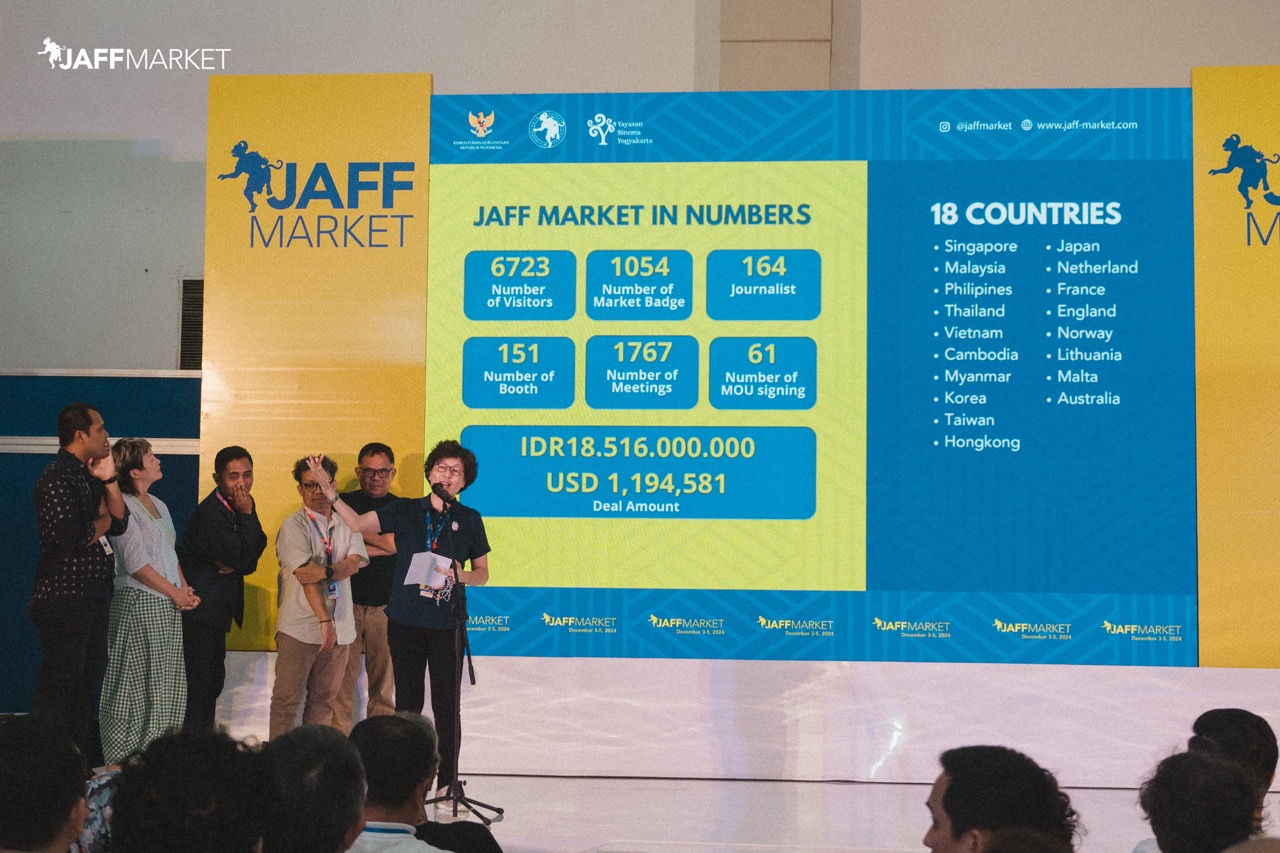
Too often, co-productions are reduced to budget-splitting exercises. JAFF Market promotes a more holistic approach, one that aligns creative goals with a distribution strategy and that nurtures real trust across countries. The numbers reflect that momentum: in its first year, JAFF Market hosted 6,723 participants from over 20 countries, with 151 exhibition booths and 243 curated meetings supporting 10 selected projects through the JFP.

This ecosystem is not just benefiting filmmakers. Regional institutions from cultural agencies to national film boards are beginning to treat JAFF Market as part of their cultural diplomacy infrastructure. Countries like Malaysia, South Korea, and the Philippines now include JAFF Market in their industry calendars, recognizing it as a valuable node where policy, funding, and talent intersect.

JAFF Market’s reach is also expanding into East Asia and Oceania, deepening ties with partners in Japan, Korea, and Australia. As Ajish Dibyo, Executive Director of JAFF Market explains, 

“Creative industries need structured spaces to build trust, especially when working across languages, legal systems, and production cultures. JAFF Market helps bridge those gaps with intentionality and care.”

That same spirit of inclusion extends beyond film. With programs like JAFF Content Market (JCM), creators in animation, games, and serialized digital formats are also finding space to access international co-production networks and unlock new distribution models. The goal is not just to support feature films but to build a resilient, multi-format content ecosystem.

Looking ahead: flexibility, strategy, and shared ambition

Co-productions come with real-world challenges from navigating censorship to negotiating IP rights and bridging language barriers. But with the right support including legal mentorship and strategic pitching, those challenges can be overcome. JAFF Market is actively helping creators move through that complexity, offering both structure and community.

For many Southeast Asian filmmakers, this means rethinking distribution strategy from the start. Should the film premiere at a festival? Run theatrically? Go straight to OTT? Or, all of the above? These questions now shape everything from genre choices to narrative structure.

Ultimately, projects like The Silent Village show what can happen when teams are bold, open, and strategically aligned. The result isn’t just a film, it’s a roadmap. A signal that Southeast Asian storytelling is stepping confidently into a future that’s regionally grounded, globally resonant, and collectively built.

JAFF Market Partners with Cinepoint to Track Indonesia’s Box Office Surge as Local Films Outpace Hollywood

Busan, 21 September 2025 – JAFF Market, the industry arm of Indonesia‘s Jogja-Netpac Asian Film Festival has inked a data partnership with Cinepoint to document the country’s striking film market reversal, where domestic productions now regularly beat Hollywood imports at the box office.

The collaboration was unveiled at the Asian Contents & Film Market in Busan, positioning the deal as key to understanding Indonesia’s rapid ascent in regional cinema.

Through the partnership, Cinepoint will serve as JAFF Market’s official data provider, offering comprehensive tracking of theatrical performance, genre trends and production metrics across Indonesia’s expanding cinema network.

“JAFF Market is an ideal partner to turn data into impact,” said Sigit Prabowo, co-founder and president commissioner of Cinepoint. “Together, we’re building an ecosystem that supports smarter decisions and long-term, sustainable growth.”

The collaboration comes as Indonesia’s film landscape undergoes a fundamental shift. Local titles that once struggled against imported blockbusters have now claimed the dominant position, with homegrown productions attracting significantly more admissions than international films since 2022 — a complete reversal from the previous decade.

The data reveals that audience loyalty has structurally realigned toward Indonesian storytelling, with local films now drawing 30-40 million annual admissions compared to imports’ 20-25 million range. This marks a dramatic turnaround from earlier years when imported titles commanded roughly double the audience of domestic productions.

“Working with Cinepoint allows us to deliver integrated and actionable insights to industry players,” said Gundy Cahyadi, head of analytics at JAFF Market. “Our analytics team at JAFF Market is closely examining cinema admissions, screen growth, content output, and evolving audience behavior with greater clarity. These insights are critical to building a real-time, evidence-based decision-making framework for producers, distributors, platforms, and policymakers.”

Horror has emerged as the breakout genre, with producers now releasing dozens of scary movies annually — a post-pandemic boom that has placed multiple horror titles among Indonesia’s biggest box office hits ever. The success has spawned various hybrid formats mixing horror with comedy, religious themes and action.

Animation and comedy are also showing strong growth, signaling diversification beyond the drama productions that once dominated local output.

JAFF Market’s forecasts, backed by Cinepoint data, project Indonesian cinema admissions will climb from 126 million in 2024 to 100 million annually for local films alone by 2026. Annual production is expected to jump from 152 titles to approximately 200 within four years.

The theatrical infrastructure is expanding to support this growth, with screen counts projected to increase from over 2,200 currently to 2,700 by 2030. Much of this expansion targets smaller cities where cinema culture is still developing.

Despite the impressive numbers, per-capita attendance remains below 0.5, suggesting substantial room for further audience development as the country’s economy and urbanization continue advancing.

“It’s no longer about choosing between screens,” said Sekarini Seruni, business director of JAFF Market. “Indonesian films now launch through festivals, theaters, and digital platforms; each channel plays a unique role in amplifying a story’s reach.”

The partnership will inform discussions at JAFF Market 2025, scheduled for Nov. 29-Dec. 1 in Yogyakarta. The second edition of the market, sponsored by Amar Bank, will feature project development programs, content markets, talent initiatives and industry screenings.

The event runs alongside JAFF’s 20th anniversary festival, which will present retrospectives and premieres from Nov. 29-Dec. 6.

“Together, JAFF and JAFF Market are defining Indonesia’s place in the global film ecosystem,” Seruni said. “We’re not just celebrating growth, we’re shaping the next decade of Southeast Asian cinema.”

JAFF Market Redefines Collaboration between Creatives and Corporates

By: Sekarini Seruni – Business Director, JAFF Market
_

Film markets have long been the domain of producers, distributors, and sales agents, the traditional players of the entertainment economy. But as the boundaries between media sectors continue to blur, a new model of engagement is emerging. At JAFF Market 2025, that model comes into sharp focus. The convergence of feature film with other sectors like streaming, publishing, and social media is not an anomaly; it is the future.

Where film markets have often served as a platform for film deals, JAFF Market has evolved into a dynamic laboratory of cross-sector collaboration. It is a space where storytellers engage directly with strategists, and where filmmakers find common ground with innovators working across creative domains and with new technologies. More than sponsorships or side conversations, they are co-creative relationships that redefine the boundaries of narrative, funding, and audience experience.

Across Asia and around the world, content has become one of the most valuable currencies. For instance, fashion brands are working with leading auteurs to craft cinematic campaigns to deepen consumer connections. Tech companies are partnering with filmmakers to enhance immersive experiences through AI and analytics. The implications are clear: content is no longer confined to screens, it is embedded across industries.

JAFF Market is uniquely positioned to harness this transformation. Rooted in the values of independent cinema yet expansive in its outlook, the market has curated a space that encourages productive collisions between the creative and corporate worlds. In 2025, Amar Bank’s participation in JAFF Market symbolizes this strategic alignment between business and the creative economy. Amar Bank is at the forefront of alternative financing models tailored for the creative economy to empower creators through access to capital.

Along with Amar Bank, at JAFF Market we encourage others to tap into this momentum. JAFF Market is an open invitation to step in, collaborate, and co-create bold new storytelling experiences. By collaborating with filmmakers, transform ideas into products, experiences, and strategies that extend far beyond the screen. JAFF Market is not just a space to pitch projects ; it’s a vibrant launchpad where bold ideas are realized, and cross-sector innovation comes to life.

What makes these partnerships work is a shared commitment to storytelling where all participants are united by the power of narrative. JAFF Market was created not just for film professionals, but for anyone who believes that stories can shape both culture and commerce. That spirit of inclusivity is what drives true innovation.

Cross-sector innovation does not come without challenges. Gaps in communication, differing timelines, and complex IP negotiations can slow progress. However, JAFF Market’s curated meetings and mentorships help overcome those hurdles. By emphasizing mutual learning and shared intent, the JAFF Market is designed to foster meaningful collaboration rather than opportunistic deals.

As the creative economy continues to expand, JAFF Market is paving the way for more structured innovation. Expect to see cross-sector incubators, co-financing labs, and knowledge-sharing networks that bring film closer to innovation-driven sectors and beyond. The goal is not to dilute cinematic expression but to empower it, ensuring stories find new life, new formats, and new audiences.

The real magic of JAFF Market lies in its capacity to surprise. It is the unexpected encounter between creative minds from different fields that sparks new forms of innovation. When creators and corporations collide with respect, curiosity, and vision, the result is more than a deal. It becomes a new blueprint for how industries can shape culture together.

JAFF Market is more than the evolution of the film industry. It embodies the future of the content economy, where every brand can become a narrative partner and every story can inspire innovation.